ALPHAPEC 9260 Nuclear & Chemical Inspection Robot Dog
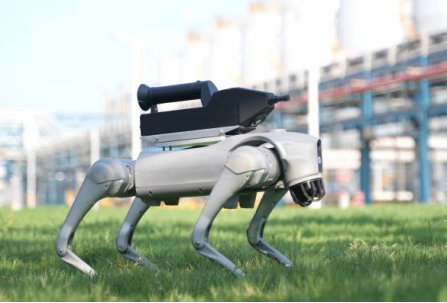
Equipped with a portable sulfur- and phosphorus-based chemical warfare agent detector
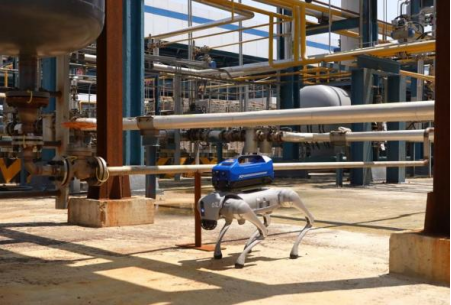
Equipped with a portable toxic and hazardous substance detector
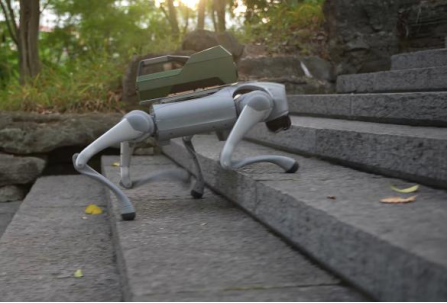
Equipped with a portable radionuclide identifier
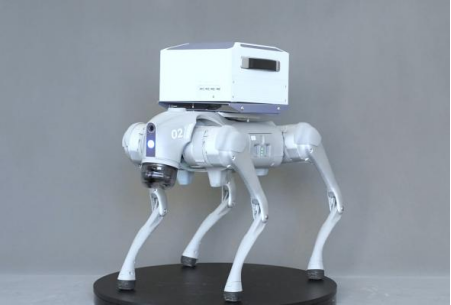
Equipped with a lightweight Fourier-transform toxic gas detector
The Nuclear-Chemical Inspection Robot Dog is an intelligent special-purpose robot designed for high-risk environment detection. Integrating nuclear radiation detection, toxic and harmful gas analysis, autonomous navigation, and remote interaction functions, it is specifically engineered for safe operations in extremely dangerous scenarios.
Equipped with a high-sensitivity γ-ray detection module and a multi-channel gas sensor array, the robot can accurately and real-time detect the intensity of radioactive substances and over 20 types of high-risk gases (including hydrogen sulfide, carbon monoxide, methane, and VOCs) in the environment. Combined with a 3D mapping and path planning system, it can autonomously traverse complex terrains such as ruins, pipelines, and steep slopes. Relying on its reinforced body, it maintains stable operation in areas inaccessible to humans, such as nuclear power plant leakage sites, chemical plant explosion sites, and geological disaster sites.
Through multi-mode communication (5G/WiFi/private network), the robot can synchronize radiation hot zone distribution maps, gas diffusion models, real-time video streams, and infrared thermal imaging to the command center, supporting rapid decision-making and emergency response. Its modular expansion interface is compatible with external devices such as acoustic detectors and robotic arms, meeting the needs of multi-scenario applications including nuclear contamination source tracing, hazardous chemical disposal, and anti-terrorism & explosive ordnance disposal. It redefines the intelligent boundaries of industrial safety and emergency rescue with robotic technology.
Optional equipment for integration includes the AP120 Portable Nuclide Identifier, AP560 Portable Sulfur-Containing & Phosphorus-Containing Nerve Agent Detector, AP5060 Lightweight Fourier Toxic Gas Detector, and AP810 Portable Toxic & Harmful Substance Detector.
(1) Weight (without payload): Approximately 15kg
(2) Dimensions (without payload): 70×31×40cm (standing), 76×31×20cm (crouching)
(3) Maximum speed: 0-3.5m/s
(4) Battery life: Approximately 3 hours
(5) Payload capacity: ≈8kg
(6) Maximum climbing drop height: Approximately 16cm
(7) Maximum climbing slope angle: 40°
(8) Sensors: Camera, infrared sensor, ultrasonic sensor, etc.
(9) Control methods: Mobile App, voice control, remote controller
(1) Detector: 1.5”×1.5” LaBr3 detector; optional GM counter tube and neutron detector
(2) Energy range: 30keV-3MeV
(3) Energy resolution: ≤3.5% (at 662keV)
(4) Measurement range: 0.01μSv/h-10mSv/h
(5) Identification: Fast digital MCA with 2048 channels; throughput ≥10⁵ cps
(6) Temperature range: -40°C-50°C
(7) Protection class: IP54
(8) Power supply: Lithium battery with built-in charger
(9) Resistance: Anti-electromagnetic interference, anti-shock, anti-vibration, and anti-drop
(10) Dimensions: 330mm×105mm×125mm
(11) Weight: Approximately 2.3kg
(1) Input voltage: 9~12V DC
(2) Power supply mode: External DC power supply
(3) Rated power: 8W
(4) External dimensions: ≤355×195×125mm (L×W×H)
(5) Host weight: ≤4kg
(6) Protection capability: Rainproof
(7) Additional capability: Nuclear radiation detection
(8) Operating temperature range 1: -20℃~50℃
(9) Operating temperature range 2: -40℃~65℃
(10) Gas detection capability: Detectable targets include chemical warfare agents (including nerve agents, blister agents, and choking agents) and industrial toxic/harmful gases; sensitivity ranges from ppb to ppm level
(11) Host warm-up time: ≤15min
The Nuclear & Chemical Inspection Robot Dog is a newly developed unmanned inspection system independently designed by our company. It adopts a modular architecture and multi-sensor fusion technology, offering both autonomous operation and remote-control capabilities.
The system can be equipped with our standardized instruments, including the AP120 Radionuclide Identifier, AP560 Hydrogen Flame Photometric Detector, AP5060 Lightweight Fourier-Transform Toxic Gas Analyzer, and AP810 Toxic & Hazardous Substance Detector.
It is suitable for inspection tasks involving nuclear radiation, chemical warfare agents, and industrial toxic/hazardous gases in scenarios such as nuclear/chemical accident sites, hazardous chemical plants, industrial parks, and customs checkpoints.
Core Intelligent Capabilities
1) Complex Terrain Penetration & Detection
2) Autonomous Task Execution
-
Preset path scanning: Automatically collects data at grid-based checkpoints.
-
Intelligent obstacle avoidance: Combines LiDAR and 3D vision for real-time path planning, adaptable to stairs, rubble, and other unstructured terrains.
3) Multi-Modal Data Fusion
-
Simultaneously transmits radiation levels, chemical gas concentrations, thermal maps, and live video streams, generating a comprehensive risk assessment report.
Technical Advantages
-
Precision breakthrough: Source localization error < 1 m; chemical detection sensitivity reaches the ppb level (for certain gases).
-
Efficiency improvement: Over 3× faster than manual inspection.
-
Risk reduction: Enables zero human exposure in high-risk environments, minimizing protective gear consumption.
-
Flexible adaptation: Modular design supports function switching within 5 minutes (e.g., from radiation detection to toxic gas detection).


